


Travertine Beige
45$
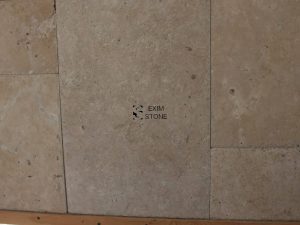
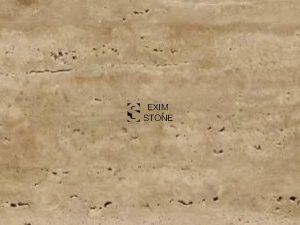
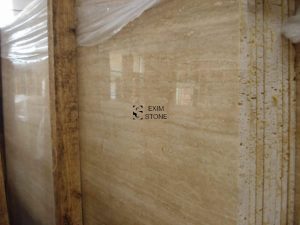
Travertine Beige stone is a beige-toned travertine. A cladding stone. The stone’s surface has a distinct pattern. Travertine Beige is perfect for interior finishing. It is in demand for interior wall, column, and fireplace decoration. This travertine is used for exterior cladding of building facades and plinths. It is a very interesting natural stone for designers, whose color is clear from its name.
Travertine Beige stone is a beige-toned travertine. A cladding stone. The stone’s surface has a distinct pattern. Travertine Beige is perfect for interior finishing. It is in demand for interior wall, column, and fireplace decoration. This travertine is used for exterior cladding of building facades and plinths. It is a very interesting natural stone for designers, whose color is clear from its name.
It’s important to note that your computer monitor may not display the stone’s color correctly, so before buying we definitely recommend viewing the stone «in person».
Natural travertine stone is a transitional form of limestone into marble. Such metamorphoses require pressure over millennia. Thus, limestone first turns into travertine under pressure, and then travertine, over millennia, turns into marble. That is why travertine is also called immature marble. Travertine, like limestone and marble, consists of calcium carbonates. In the world of minerals, these natural stones are represented by aragonites. They make up the calcareous tufa, also called travertine.
Physical and chemical properties of travertine.
The structure of travertine can vary, as it depends on the place of formation. Solid, monolithic rocks appear in bodies of water with still water. And the proximity of waterfalls and strong currents form nodular, porous stones. They are also called spongy. Water flows bring a mass of elements – leaves, algae, skeletons of small animals, shells. The more such elements, the more porous the resulting stone.
Even dense natural travertine is most often not hard. It is easily cut with a circular saw, any disc saw. This is because near the surface the rock does not experience shifts of earth masses and is not subjected to great pressure, and therefore does not harden. But sometimes travertine does decrystallize, becoming hard and dense. This happens when new carbonate sediments penetrate the pores of previously formed rock. As a result, all pores are filled.
The strength of travertine also improves with time. The stone surface becomes denser when interacting with air. So when products made of sedimentary rock age, they also become stronger. This explains why many ancient travertine structures can still be seen today. Travertine is resistant to temperature fluctuations and does not absorb moisture. That is why it is often used for cladding outdoor objects. The darker varieties of travertine are considered the most wear-resistant.
The advantages of travertine also include its eco-friendliness and durability. It does not rot, does not burn, does not rust, and is not afraid of frost.
Application of travertine.
The price of travertine is lower than its closest competitor (marble). At the same time, the aesthetic and practical properties are very similar.
Travertine tiles can be used for cladding both inside and outside premises.
Cladding of arches, columns, steps.
Using travertine as a raw material for paving tiles.
In bathrooms, travertine tiles are used for floor and wall cladding. Our company has also made countertops for washbasins from this «cozy» stone.


Reviews
There are no reviews yet.